
Charity Annual Report Design in Ireland: How to Communicate Impact, Build Trust and Meet the Changing Reporting Expectations of 2026
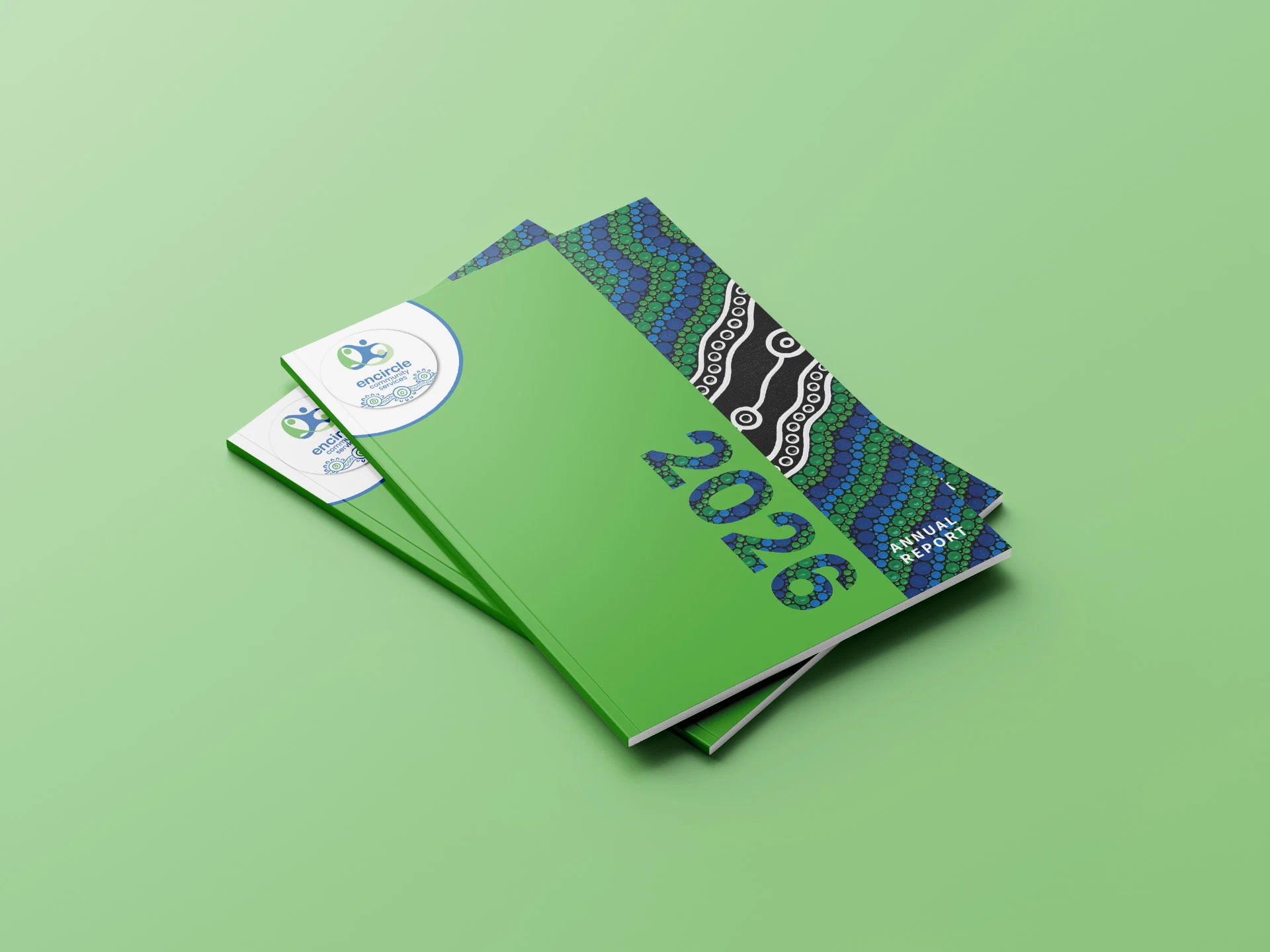
Introduction: Why charity annual reports matter more than ever
Irish charities perform an essential role in communities across the country. From supporting families experiencing hardship and providing services to vulnerable people to protecting the environment, advancing education and improving healthcare, charities make a measurable difference to Irish society.
But communicating that difference is not always straightforward.
Charities need to demonstrate how donations and funding are used, explain the services they provide, present financial information and show the outcomes of their work. They must also maintain the confidence of donors, funders, beneficiaries, regulators and the wider public.
The annual report is one of the most important opportunities to bring all of this information together.
Unfortunately, many charity annual reports still approach this task as an administrative exercise. They contain the necessary information, financial statements and summaries of activities, but do not always communicate the organisation's achievements as effectively as they could.
A document filled with lengthy paragraphs, complicated financial tables and inconsistent presentation can make it difficult for readers to appreciate the real value of a charity's work.
This is where professional charity report design makes a difference.
A well-designed annual report transforms information into a compelling and accessible story. It helps readers understand what an organisation does, who benefits from its work, how resources are being used and what difference those activities make.
There is also an important development in charity reporting during 2026. The revised Charities Statement of Recommended Practice (SORP) introduces enhanced expectations around impact reporting, objectives, activities and future plans for organisations applying the framework.
For Irish charities, this is an excellent opportunity to reconsider how annual reports are structured, written and designed.
Rather than simply documenting another year of activity, charities can use their annual reports to demonstrate accountability, communicate meaningful outcomes and strengthen relationships with the people who support them.
1. The changing expectations of charity reporting in Ireland
Transparency has always been important in the charitable sector. Donors want to know where their money goes, funders need evidence that their investment is making a difference, and beneficiaries want confidence that organisations are delivering the services they promise.
These expectations are becoming increasingly important as charities compete for funding and public attention.
The Irish charity sector includes organisations of very different sizes, from small community groups operated by volunteers to national organisations employing hundreds of people.
Despite their differences, all registered charities have reporting responsibilities.
Under Section 52 of the Charities Act 2009, registered charitable organisations must prepare and submit an annual report to the Charities Regulator within ten months of the end of their financial year.
This reporting process provides information about the charity's activities and finances and contributes to the transparency of the public Register of Charities.
However, submitting the required information is only one part of effective reporting.
A charity's published annual report should also help stakeholders understand the organisation's work and its contribution to society.
The significance of the revised Charities SORP 2026
One of the important developments for charity reporting in 2026 is the revised Charities Statement of Recommended Practice, commonly known as the Charities SORP.
The revised framework applies to relevant reporting periods beginning on or after 1 January 2026, with early adoption permitted.
It introduces a more structured, tiered approach to reporting and places greater emphasis on explaining charitable objectives, activities, impact and future plans.
One particularly important area is impact reporting.
Rather than simply describing what a charity did during the year, the framework encourages organisations to explain the difference their work made to beneficiaries and, where practical, wider society.
For example, a charity providing support to people experiencing homelessness might traditionally report:
- The number of people who accessed its services.
- The number of meals distributed.
- The number of emergency accommodation placements provided.
- The number of support sessions delivered.
These figures are useful, but they do not necessarily explain the longer-term difference the organisation has made.
A more developed impact narrative might also explain how many people moved into more stable accommodation, how access to healthcare improved, or how individuals were supported to develop greater independence.
The distinction is important.
Activity tells readers what happened. Outcomes explain what changed. Impact explores the wider difference resulting from those changes.
An effective charity annual report should help readers understand all three.
There is an important qualification for Irish organisations: the revised SORP is currently recognised as recommended good practice in the Republic of Ireland rather than being automatically mandatory for every charity. Its application and any future statutory requirements should be confirmed with the charity's accountant or professional advisers.
Nevertheless, its emphasis on meaningful impact reporting provides a useful direction for charities looking to improve their annual publications.
2. Move beyond statistics: Tell the story behind the numbers
Statistics are an essential part of charity reporting.
They demonstrate the scale of an organisation's activities, provide evidence of performance and allow readers to understand how resources are being used.
However, numbers alone rarely tell the complete story.
Consider a charity that reports supporting 2,000 families during the year.
That is an impressive figure, but what does it actually mean?
How many families received ongoing support? What challenges were they experiencing? What services did the charity provide? Did the support help families access housing, education, healthcare or employment?
The annual report should provide enough context to help readers understand the significance of the statistics.
Combine quantitative and qualitative information
The strongest charity reports combine measurable results with human experiences.
Quantitative information provides evidence of scale and performance.
Qualitative information helps explain the experiences, circumstances and changes behind those results.
For example, a report from a family support charity might include:
The numbers
- 1,500 families supported.
- 3,200 counselling sessions delivered.
- 850 parents participated in educational programmes.
- 92% of surveyed participants reported improved confidence.
The human story
A short, appropriately anonymised case study explaining how a parent accessed the organisation's services, received practical support and developed the confidence to manage a difficult situation.
Together, these elements provide a much richer understanding of the charity's work.
The statistics establish the scale of the activity, while the case study helps readers appreciate what those services mean to individuals and families.
Give your beneficiaries a voice
Where appropriate and with informed consent, including the experiences of beneficiaries can make a report considerably more engaging.
Short quotations, personal reflections and carefully selected photographs can help communicate the human side of an organisation's work.
However, these stories should always be handled sensitively.
Charities working with vulnerable individuals need to consider privacy, dignity, informed consent and the potential consequences of publishing identifiable information.
The objective should never be to use someone's personal circumstances simply to create an emotional response.
Instead, beneficiary stories should demonstrate the value of the organisation's work while respecting the people whose experiences are being shared.
Design can bring these stories together
This is where thoughtful report design becomes particularly valuable.
A full-page case study, an illustrated journey or a carefully designed combination of photography, quotations and statistics can communicate information much more effectively than several pages of uninterrupted text.
The design should guide the reader through the story, making the important information easy to identify without overwhelming the content.
For charities, the result is an annual report that communicates both the scale and the significance of their work.
3. Make financial transparency easier to understand
Financial transparency is central to maintaining public confidence in charities.
Donors and funders want reassurance that money is being managed responsibly and directed towards the organisation's charitable objectives.
Yet financial information can be one of the most difficult sections of an annual report to communicate effectively.
Many charity reports contain detailed financial statements, income and expenditure breakdowns and explanations of reserves. This information is important, but it can be challenging for readers without a financial background.
Professional financial information design can make these sections considerably easier to understand.
Show where the money comes from
A charity might receive income from several sources:
- Individual donations.
- Corporate partnerships.
- Government grants.
- Philanthropic foundations.
- Fundraising events.
- Legacy donations.
- Trading or other activities.
A well-designed income breakdown can help readers see where funding originates and how dependent the organisation is on particular sources.
For example, a simple chart could show the proportion of total income received from individual donations, grants and corporate partnerships.
This immediately provides a clearer picture than presenting the same information in a dense paragraph.
Explain where the money goes
Expenditure is equally important.
A charity might divide its spending between programme delivery, staff costs, fundraising, administration and other operating expenses.
A clear visual presentation can help readers understand the allocation of resources.
However, financial charts must be accurate and appropriately contextualised.
For example, a charity with significant administration costs may need to explain the reasons behind them, particularly if it has expanded its services or invested in systems and infrastructure.
Staff training, governance, financial management, technology and safeguarding can all be essential to delivering effective charitable services.
The objective is transparency, not simply presenting the lowest possible administrative expenditure.
Explain reserves clearly
Reserves are another area where charities can improve their communication.
A charity may hold reserves to manage financial uncertainty, meet future commitments, maintain services during periods of reduced income or respond to unexpected demand.
If a charity holds significant reserves, readers may reasonably want to understand why.
Rather than simply presenting the balance, the annual report should explain the organisation's reserves policy and provide context where appropriate.
A clear explanation helps stakeholders understand how financial decisions support the charity's long-term sustainability.
Use visual summaries alongside detailed statements
Financial infographics, charts and summary tables should complement the formal accounts, not replace them.
A useful approach is to provide a visually engaging financial overview before presenting the detailed statements.
This gives readers an accessible introduction while retaining the necessary financial information for trustees, funders and other stakeholders.
A specialist report designer can help establish this balance between visual clarity and financial accuracy.
4. Use data visualisation to demonstrate charitable impact
Data visualisation is one of the most effective ways to improve charity annual report design.
Many organisations collect substantial amounts of information throughout the year, but the resulting reports often present this data in conventional tables or paragraphs.
The problem is that readers may struggle to identify the most important findings.
Well-designed charts and infographics can make complex information easier to interpret.
For example, an organisation working in homelessness services might communicate:
- The number of people supported.
- The number of individuals accessing emergency accommodation.
- The number of people moving into longer-term housing.
- The number of healthcare appointments facilitated.
- Changes in demand for services over several years.
These figures could be presented through a combination of charts, diagrams, maps and highlighted statistics.
Choose the right visualisation
Different types of information require different approaches.
Bar charts are useful for comparing performance across services, locations or reporting periods.
Line charts help demonstrate changes over time, such as increases in demand or improvements in programme outcomes.
Pie or doughnut charts can show proportions of income or expenditure, although they should be used selectively when a simple comparison is required.
Infographics can summarise several related statistics in a visually engaging format.
Maps can illustrate geographical reach, service coverage or regional activity.
Process diagrams can explain how a charity's services work or how beneficiaries move through a particular support programme.
The most important consideration is clarity.
A chart should make information easier to understand, not simply make the page look more interesting.
Put the figures into context
One of the biggest mistakes in charity impact reporting is presenting statistics without explaining what they mean.
Suppose an organisation reports that it provided 15,000 meals during the year.
That number becomes more meaningful when the report explains whether demand increased, how the service responded and what the provision of those meals meant for the people supported.
Comparisons with previous years can also help readers identify trends.
Where appropriate, charities should consider including three-year comparisons for important performance indicators.
This helps demonstrate progress, highlight emerging challenges and provide a more balanced picture of organisational performance.
It is important, however, to use consistent definitions and explain any changes in methodology that affect comparisons.
A visually attractive chart cannot compensate for unreliable or misleading data.
5. Design your annual report around the reader
One of the most common weaknesses in charity annual reports is an unclear structure.
Information is often organised according to the internal departments that supplied it, rather than the questions readers are likely to ask.
A report might move from the chairperson's statement to financial information, then to a series of departmental updates, before eventually reaching the charity's impact figures.
The reader has to work to piece together the organisation's achievements.
A more effective approach is to structure the report around the charity's purpose and the information its audiences need.
Start with a strong introduction
The opening pages should establish what the organisation does, whom it supports and what it achieved during the year.
A concise introduction and a well-designed impact summary can provide an immediate overview.
Consider highlighting three to five important achievements, supported by meaningful statistics.
Establish a clear contents page
A useful contents page is more than a list of page numbers.
It should help readers understand the organisation of the publication and find important sections quickly.
For digital reports, clickable navigation can make this even more effective.
Give each section a clear identity
A consistent visual system helps readers recognise where they are within the publication.
Colour, typography, chapter dividers, photography and recurring graphic elements can establish a visual identity for each section while maintaining overall consistency.
For example, a charity working across education, healthcare and community support might use a distinct visual treatment for each service area.
The design should feel connected without making every page look identical.
Make key information easy to find
Not everyone will read a 40-page annual report from beginning to end.
Some readers will want financial information. Others will be interested in specific services, achievements or future priorities.
Clear headings, highlighted figures, short summaries and intuitive navigation help accommodate different reading habits.
The aim is to make the report useful to a wide range of stakeholders without sacrificing the detail required by those who need it.
6. Accessibility: Make your charity report available to everyone
Accessibility deserves particular attention when designing reports for charities.
Charities often work with people who experience barriers to information and participation. Their annual reports should reflect the same commitment to inclusion.
An accessible publication should be designed so that people with different abilities can access and understand its contents.
This includes people with visual impairments, people using screen readers, individuals with cognitive or learning difficulties and readers who may find complex language challenging.
Accessibility is not simply a technical consideration. It is part of communicating responsibly.
Readable typography
Use typefaces that are easy to read and avoid unnecessarily small body text.
Maintain appropriate line spacing and provide sufficient separation between paragraphs and sections.
Colour contrast
Text should have sufficient contrast against its background.
Avoid relying on subtle colour differences to communicate important information.
For example, a chart should use labels and other visual distinctions rather than expecting readers to identify categories through colour alone.
Clear language
Avoid unnecessary jargon, complicated sentence structures and unexplained abbreviations.
Plain English can make a report more accessible to donors, beneficiaries and members of the public.
Logical document structure
Digital reports should have a meaningful heading hierarchy and logical reading order.
The document's underlying structure should reflect its visual presentation so that assistive technologies can interpret it correctly.
Accessible PDFs
A visually attractive PDF is not automatically an accessible PDF.
Depending on the agreed accessibility requirements, production may need to include:
- Properly tagged PDF structure.
- Correct heading levels.
- Logical reading order.
- Descriptive alternative text for informative images.
- Meaningful hyperlinks.
- Accessible tables.
- Appropriate document language.
- Sufficient colour contrast.
- Selectable, searchable text.
The final document should be tested rather than simply assumed to be accessible.
Irish organisations should also understand which accessibility rules apply to them. The European Web Accessibility Directive and Ireland's implementing regulations apply to public-sector websites and documents within their scope, but they do not automatically cover every charity. Other contractual, funding or legal obligations may also be relevant.
The updated European accessibility standard published in September 2026 also points towards greater alignment with WCAG 2.2, although the applicable legal reference standard should be checked rather than assuming that every new technical standard is already mandatory.
For charities, the best approach is to establish accessibility requirements before design begins.
Retrofitting accessibility into a completed publication can be more difficult and expensive than planning for it from the outset.
7. Digital-first charity reports: Think beyond the printed document
Printed annual reports still have a place, particularly for board meetings, fundraising events and stakeholder presentations.
However, digital publication offers charities an opportunity to reach a much wider audience.
A downloadable PDF can be shared through a website, included in fundraising communications, distributed to donors and made available to potential funding partners.
It can also be accessed long after the original publication date.
But simply exporting a print document as a PDF does not necessarily create a good digital experience.
Design for screens
Text needs to remain readable on laptops, tablets and mobile devices.
Pages should avoid unnecessarily dense layouts, and important information should not depend on small details that become difficult to interpret on a screen.
Include useful navigation
Clickable contents pages, internal links and clearly labelled external links can make digital reports easier to use.
Readers should be able to move between sections without repeatedly scrolling through the entire document.
Optimise file size
Large PDFs can be frustrating to download, particularly for people using mobile devices or slower internet connections.
Images should be appropriately optimised while retaining sufficient quality.
Consider an interactive report
Some organisations may benefit from more advanced digital publications.
These can include interactive charts, clickable statistics, embedded links and navigation features.
However, interactive elements should be introduced only where they improve the reading experience.
For many charities, a professionally designed, well-structured and accessible PDF will be the most practical solution.
The format should be selected according to the organisation's audience, budget, communication objectives and accessibility requirements.
8. Build trust through honest and balanced reporting
A charity annual report should celebrate achievements, but it should also provide an honest account of the organisation's performance.
Readers are unlikely to expect every target to have been achieved or every project to have gone according to plan.
What matters is how the organisation explains its progress and responds to challenges.
If demand for services increased significantly, explain how this affected the organisation.
If a fundraising target was missed, provide appropriate context.
If a programme did not achieve the expected results, explain what was learned and what will change.
This type of balanced reporting can strengthen credibility.
An annual report that contains nothing but positive statements may appear less convincing than one that acknowledges difficulties and explains how the organisation intends to address them.
Explain your priorities for the coming year
The report should not end with a description of what happened.
Readers also need to understand what comes next.
What are the organisation's priorities? Which services will it develop? What challenges does it expect to face? How will it measure progress?
A clear forward-looking section helps demonstrate that the charity has a considered strategy and is planning responsibly.
Demonstrate accountability
Trust is strengthened when organisations can show a clear relationship between their objectives, resources, activities and results.
A good report should help readers understand:
- What the charity intended to achieve.
- What resources were available.
- What activities took place.
- What results were achieved.
- What the organisation learned.
- What it intends to do next.
Bringing these elements together creates a more convincing account of organisational performance.
9. What should an effective Irish charity annual report include?
Every charity is different, and the final structure will depend on its size, activities, governance arrangements and reporting requirements.
However, the following outline provides a useful starting point for many organisations.
1. Cover and introduction
A professional cover, a concise description of the organisation and an introduction to the reporting period.
2. Chairperson or chief executive statement
A summary of the year, significant achievements, challenges and strategic direction.
3. Impact at a glance
A visual overview of key statistics and achievements.
4. The organisation's work
An explanation of the services, programmes and activities delivered during the year.
5. Beneficiary stories
Appropriately selected case studies, quotations and personal experiences that help illustrate the organisation's work.
6. Outcomes and impact
Evidence of what changed as a result of the charity's activities, with comparisons and supporting explanations where available.
7. Financial overview
A clear summary of income, expenditure, reserves and financial performance, supported by the relevant detailed accounts.
8. Governance and accountability
Information about trustees, governance arrangements, risk management and other relevant organisational responsibilities.
9. People and partnerships
Recognition of staff, volunteers, donors, corporate partners and other organisations that contributed to the charity's work.
10. Future priorities
An explanation of the organisation's plans and priorities for the next reporting period.
11. Financial statements and supporting information
The relevant formal statements, disclosures and supporting material.
This structure should be adapted to the charity's specific circumstances. It is not a substitute for professional advice on statutory or accounting requirements.
10. Why professional charity report design is a worthwhile investment
Charities must make careful decisions about how they spend their resources.
Every investment needs to be considered in the context of the organisation's objectives and the people it serves.
It is therefore understandable that some organisations question whether they need to invest in professional annual report design.
The answer depends on what the organisation wants its report to achieve.
A professionally designed report is not simply a more attractive version of an existing document.
It can improve the way information is organised, make complex statistics easier to understand, strengthen the presentation of financial information and create a more consistent experience for readers.
It can also save internal time.
Charity staff are often responsible for preparing reports alongside their existing roles. They may be gathering information from multiple departments, coordinating financial contributions, collecting photographs, writing case studies and obtaining approval from senior management or trustees.
A structured design and production process can help bring these contributions together.
What does a specialist report designer provide?
A specialist report designer can assist with:
- Publication structure and layout planning.
- Professional cover and interior design.
- Typography and visual identity.
- Infographics and data visualisation.
- Financial charts and tables.
- Photography and illustration.
- Case study presentation.
- Digital PDF production.
- Accessible document design.
- Print-ready artwork and production management.
The value is in bringing these elements together into a coherent publication.
The designer should also understand the importance of accuracy. Figures, financial statements, quotations and approved content must be preserved and presented appropriately.
A report should look professional, but it must also be reliable.
11. Examples of effective charity report design in Ireland
Looking at completed charity publications can help organisations understand what is possible.
Different charities have different communication challenges, but several principles are consistent: clear structure, strong visual storytelling, meaningful statistics and an appropriate balance between financial information and human impact.
At Pixelo Design, we have worked with Irish charities and not-for-profit organisations to communicate complex activities through professional annual reports and reviews.
One Family – Annual Report 2025
One Family works with individuals and families across a range of support services, including parenting, counselling, advocacy and education.
Its annual report needed to bring together service information, strategic priorities, financial reporting and organisational achievements within a single digital publication.
The 35-page report uses an impact-led approach, making important service statistics easy to identify while presenting the wider work of the organisation in a clear and engaging format.
It demonstrates how a charity can bring together multiple service areas without making the report feel fragmented.
Merchants Quay Ireland – Annual Review
Merchants Quay Ireland supports people experiencing homelessness, addiction and social exclusion.
The challenge in communicating this work is balancing significant operational information with the personal experiences behind the statistics.
Its annual review brings together service information, impact data and human stories to help readers understand the organisation's work and its contribution to Irish society.
This is an important consideration for charities whose services involve complex and sensitive issues.
The report needs to communicate the scale of the work while ensuring that the people behind the figures remain central to the story.
North Leinster Citizens Information Service
North Leinster Citizens Information Service required a publication that could communicate activity across five counties while balancing detailed governance, financial information and service performance.
The resulting 72-page annual report demonstrates how a carefully structured design can make a substantial amount of information easier to navigate.
These examples show that charity annual reports do not need to sacrifice detail to achieve visual clarity.
With the right structure and design approach, even complex publications can be engaging and accessible.
12. Planning your charity's next annual report
The most effective reports are rarely produced at the last minute.
Starting early gives the organisation time to gather accurate information, identify the most important achievements, prepare case studies and coordinate the contributions of different departments.
It also allows the designer to establish the publication structure before all the content has been finalised.
A practical preparation process might look like this:
Step 1: Establish the reporting requirements
Confirm the charity's financial reporting period, relevant statutory requirements, accounting framework and any funder-specific reporting obligations.
Step 2: Identify the key messages
Decide what the organisation wants readers to understand about its work and achievements.
Step 3: Gather the evidence
Collect financial information, service statistics, outcome data, photographs, case studies and relevant organisational updates.
Step 4: Review the impact information
Distinguish between activities, outputs, outcomes and longer-term impact. Make sure the claims in the report are supported by appropriate evidence.
Step 5: Agree the structure
Prepare a proposed contents page and identify the information required for each section.
Step 6: Appoint a specialist report designer
Engage a designer early enough to contribute to the visual structure and publication planning.
Step 7: Design, review and approve
Develop the publication, review content and figures carefully, and obtain the appropriate organisational approvals.
Step 8: Complete production and quality checks
Check the final PDF, links, page numbering, images, document structure and accessibility requirements. Prepare print-ready files if a printed version is required.
This process helps avoid one of the biggest problems in annual report production: receiving a large amount of unstructured content shortly before the publication deadline.
Conclusion: Your annual report is an opportunity to demonstrate your impact
For Irish charities, the annual report is much more than a document produced to satisfy reporting requirements.
It is an opportunity to explain the organisation's purpose, demonstrate how resources are being used and show the difference its work makes to individuals and communities.
The developments in charity reporting during 2026 provide an additional reason to reconsider how this information is communicated.
Greater emphasis on impact, clearer reporting structures and the growing importance of accessibility all point towards a more thoughtful approach to charity publications.
But meeting these expectations does not mean producing a longer or more complicated document.
In many cases, it means making the information clearer.
It means presenting statistics in a way that readers can understand, combining evidence with meaningful stories, explaining financial information and creating a publication that is accessible to its intended audience.
Most importantly, it means remembering that behind every statistic is a person, a family or a community whose circumstances the charity is working to improve.
A well-designed annual report brings those stories, achievements and responsibilities together.
Professional charity annual report design in Ireland
At Pixelo Design, we specialise in designing professional annual reports and publications for Irish charities, not-for-profit organisations, government bodies and businesses.
Our approach combines editorial design, information design, infographics and digital publication to help organisations communicate complex information clearly and professionally.
Whether you are preparing a 20-page charity annual report or a more substantial impact publication, we can help transform your content into a coherent, engaging and professionally designed document.
Planning your charity's next annual report?
Explore our Annual Report Design Services or contact Pixelo Design to discuss your next publication.
Pixelo Design – Professional annual report and charity report design for organisations across Ireland.