
How to Tell a Better Story Through Your Annual Report
Most annual reports get skimmed once and filed away. That's the problem this article sets out to fix. Good annual report storytelling turns a document full of figures into something people actually want to read, and the numbers back this up. A 2025 cross-country analysis of 2,707 company-year observations across 41 nations demonstrated that firms producing readable, optimistic integrated reports command a higher market value of equity. So if your report currently reads like a spreadsheet with a cover page, there's a better way to do this.
Objective
This guide is here to help Irish businesses move beyond dry, compliance-first annual reports. We'll walk through how to build a narrative structure, use design to support that story, and get stakeholders to actually read what you've put together.
Key Takeaways
- A strong annual report tells a year-long story, not just a set of figures.
- Structure matters. Give your report a beginning, middle and end.
- Real examples and quotes make numbers stick in people's minds.
- Design choices, from layout to photography, carry as much weight as the words.
- Getting the annual report design process right early saves time and revisions later.
Why Does Annual Report Storytelling Matter?
Shareholders, employees, investors and customers all read your report differently. Some scan the highlights, some dig into the detail, but nearly all of them are looking for context, not just data.
Beyond Compliance and Numbers
An annual report has legal boxes to tick, no question. But treating it purely as a compliance document is a missed opportunity. The same pages that satisfy a regulator can also explain why a difficult year happened, or how a new strategy came together.
Building Trust With Stakeholders
People trust companies that are upfront about both wins and setbacks. A report that only celebrates good news tends to read as spin. One that walks through challenges honestly, and shows how they were handled, builds far more credibility.
What Makes a Strong Narrative Structure?
Every business has a story worth telling. The trick is shaping it so readers can follow it easily.
Give Your Year a Beginning, Middle and End
Think of your reporting year in three parts:
- Where the business started, and what the goals were.
- What happened along the way, including the bumps.
- Where things stand now, and what comes next.
This simple arc gives readers something to follow, rather than a wall of disconnected updates.
Use Real People and Real Examples
Numbers alone rarely move anyone. A quote from a team member, a short case study, or a customer story does far more to bring a strategy to life.
Case Studies and Quotes That Land
Keep these short. A few sentences from a real person, tied to a specific result, will outperform a page of abstract commentary every time.
How Does Design Support Annual Report Storytelling?
Words carry the narrative, but design decides whether anyone reads them at all.
Visual Hierarchy and Data Visualisation
Charts, pull quotes and clear section breaks help readers find what matters without wading through dense paragraphs. A busy page with no hierarchy loses people fast.
Consistent Brand Voice Throughout
Fonts, colours and imagery should match the rest of your brand. A report that looks disconnected from your website or marketing materials undermines the story you're trying to tell.
Why Photography Choices Matter
Stock imagery rarely lands well in an annual report. People can spot it a mile off. Real photos of your team, premises or projects give you something generic shots just can't fake.
Not sure where to start with the visuals? Get in touch with our team and we'll talk it through.
Understanding the Annual Report Design Process
Know what to expect from the annual report design process and the whole project runs smoother.
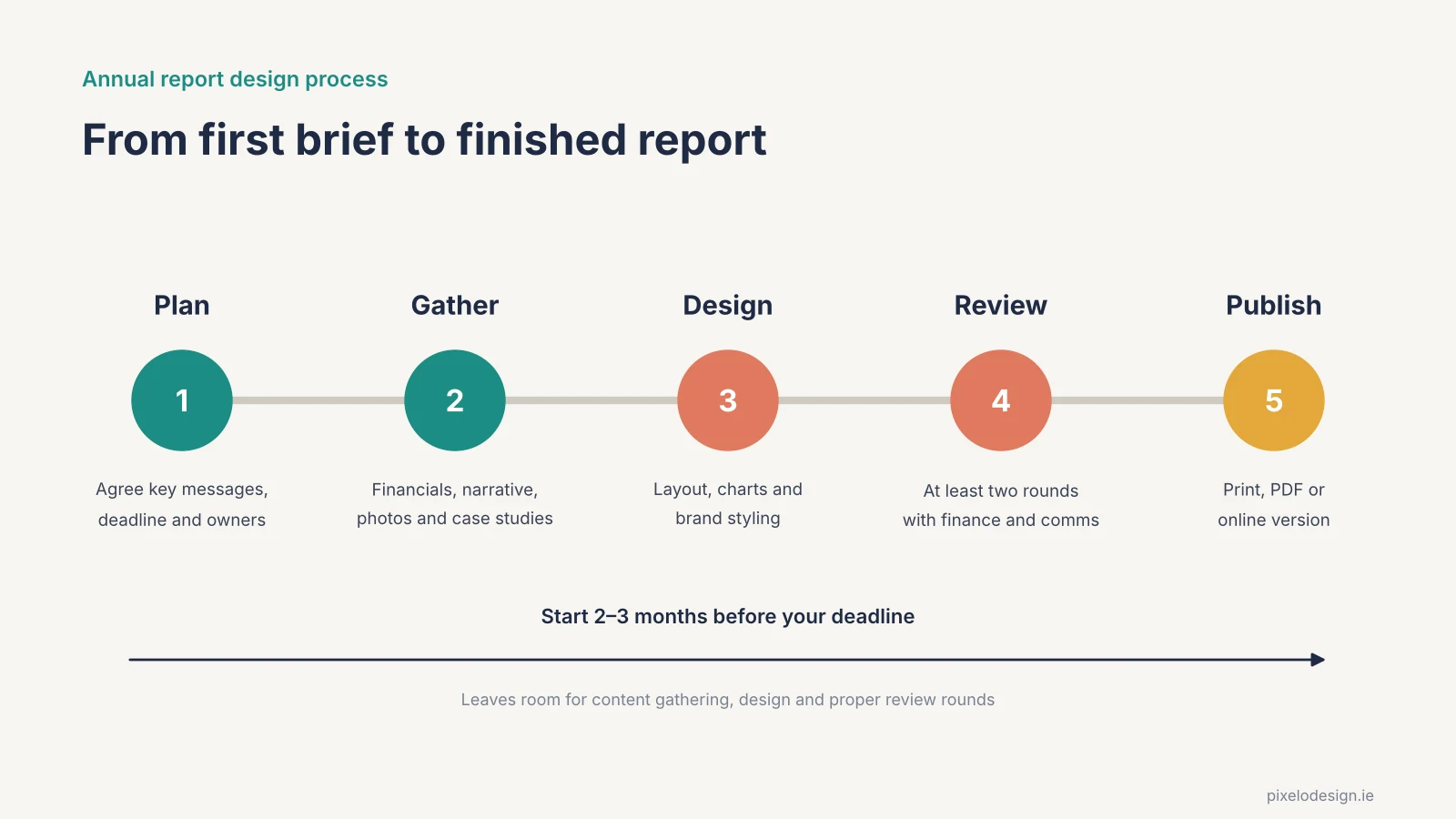
Discovery and Content Gathering
This is where financial data gets pulled together, narrative sections get drafted, and any photography or case studies are gathered up.
Drafting, Design and Review Rounds
Once content is signed off, layout and design work starts. Proofing rounds follow, to catch anything that doesn't read clearly or sit right before it goes to print or publication.
- Get your key messages straight before drafting starts.
- Bring finance and communications teams in early.
- Leave time for at least two review rounds. You'll need it.
Want help managing this process from start to finish? Request a quote and we'll take it from there.
Getting Annual Report Storytelling Right for Your Business
Pulling all of this together takes planning, but the payoff is a document people genuinely engage with rather than skim past. Start with your narrative arc, back it up with real examples, and let the design carry the story rather than bury it. At Pixelo Design, we've built reports that balance compliance with genuine storytelling for businesses across Ireland. Talk to us if you'd like help with your next one.
Frequently Asked Questions
1. Why is storytelling important in a company's annual report?
It turns dry financial data into something readers can actually connect with, which builds more trust with shareholders, staff and customers alike.
2. How long should an annual report narrative section be?
There's no fixed rule here. Most effective narrative sections stay short, leaning on quick case studies and quotes instead of long blocks of text.
3. Who should be involved in drafting the report?
Finance, communications and leadership all need a seat at the table. Each one brings a different piece of the year's story, and you'll miss something without all three.
4. Does design really affect how a report is read?
It does. Clear layout, good imagery and a consistent brand voice decide whether people actually engage with the content or just flick past it.
5. How far in advance should we start planning our annual report?
Two to three months before your deadline is a sensible target. That leaves room for content gathering, design work and a proper review process, without a last-minute scramble.
If you're ready to start planning yours, contact Pixelo Design and we'll help you shape a report worth reading.